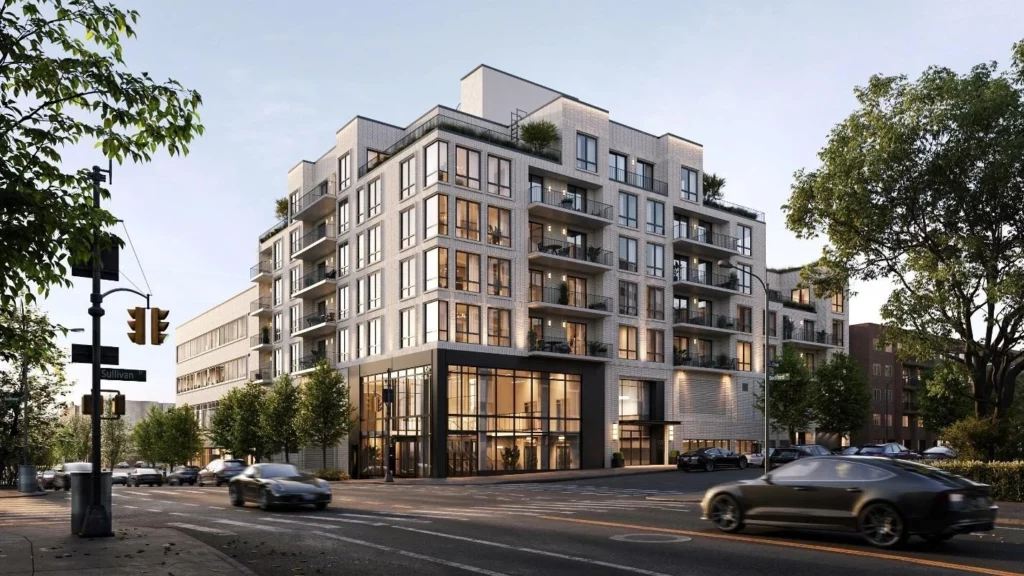
Freedes Studio uses GenAI rendering tools to accelerate real estate marketing and shorten pre sales timelines dramatically.
Freedes Studio integrated Midjourney, Kling AI, and Google Gemini Nano Banana into its visualization workflow to speed property sales with GenAI. The company targets a major real estate challenge: marketing unbuilt properties before construction finishes. Traditional rendering pipelines often require weeks of revisions, delaying investor outreach and pre-sales campaigns. Developers lose momentum when marketing materials arrive too slowly for competitive markets. GenAI reduces these bottlenecks by accelerating creative iteration and rendering production across large property portfolios.
Freedes applies GenAI across three production stages to improve speed and scalability. Midjourney accelerates concept exploration for layouts, lighting, and material variations during early design phases. Nano Banana enables rapid scene edits without rebuilding entire renderings from scratch. Kling AI generates motion sequences and high-resolution visual assets for marketing campaigns. This hybrid workflow solves a common enterprise problem: balancing production speed with premium visual quality. Real estate firms need faster content generation without lowering presentation standards for buyers and investors.
The biggest operational challenge involved reducing revision cycles while preserving photorealistic consistency. Traditional rendering changes often require expensive manual rework across multiple scenes. GenAI automates repetitive editing tasks while maintaining visual coherence between revisions. Faster rendering turnaround allows developers to launch websites, sales decks, and brokerage campaigns weeks earlier. Earlier marketing directly improves pre-construction sales velocity and investor engagement in high-interest-rate environments.
The broader significance extends beyond architectural visualization. Many industries now face pressure to create high-quality visual content faster without expanding production teams. Freedes demonstrates how GenAI can compress creative production timelines while scaling customization. The case also highlights a larger enterprise trend: GenAI increasingly functions as a workflow accelerator instead of a standalone creative tool. Companies adopting hybrid human-plus-GenAI production models may gain substantial operational speed advantages.
Why it matters
Freedes shows how GenAI can accelerate enterprise content production without sacrificing quality.
• It solves slow visualization workflows that delay property marketing and investor outreach
• It reduces repetitive rendering revisions using GenAI-assisted editing tools
• It enables earlier pre-sales campaigns through faster creative production cycles
• It demonstrates hybrid GenAI workflows for scalable visual content operations
• It represents a broader enterprise challenge around speed, personalization, and production efficiency