KT’s GenAI customer service now fields an average of 1.2 million calls a month and resolves 81% of them on the first contact.
What KT Put Into Production
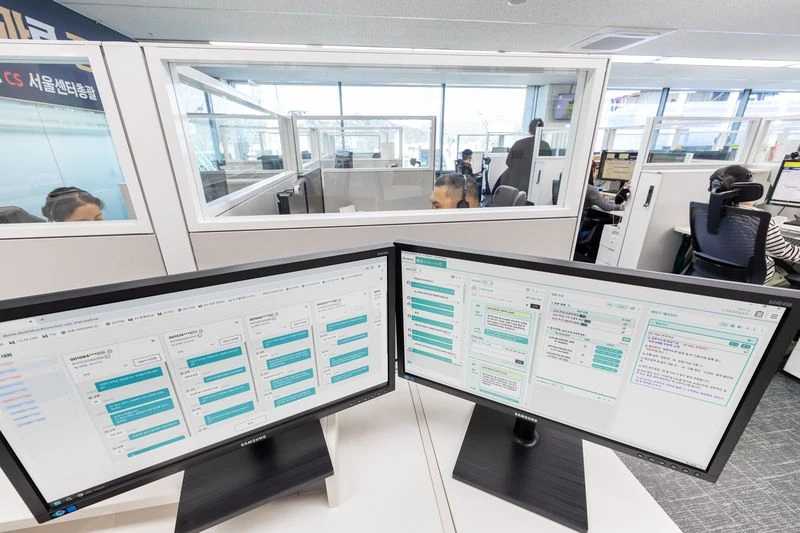
KT, a South Korean telecom operator, said on 29 October 2026 that two GenAI systems are now carrying a large share of its customer support work. The first is a voicebot that answers calls around the clock. It takes fault reports, runs remote troubleshooting, logs after-sales requests, confirms that problems were fixed, and books technician visits. The second, called AI Consultation Assist, works alongside human agents before, during and after a call.
KT has not named a vendor or an underlying model for either system.
The Problem Behind the GenAI Customer Service Push
Before the rollout, KT resolved 77% of consultations on the first contact. Just under a quarter of callers therefore needed a second touch, and average handling time ran longer than it does now. Calls that wander are part of the difficulty. A caller can open with a fault, then move to a different question entirely, and a system that cannot follow the shift hands the call back to a person.
KT says the voicebot uses large language model based intent recognition and two-way conversation, so it keeps up when a caller changes topic mid-call. Meanwhile the assist tool works on the agent’s side of the line. It surfaces relevant information while the agent is still talking. Afterwards, it writes the call category and the summary into the log, and it analyses call quality to flag where agents can improve.
The Results KT Reports
First-contact resolution rose four percentage points, from 77% to 81%. Average call handling time fell by 31 seconds, an 11% reduction, after the assist tool was introduced. Agent turnover has edged down, though KT gave no figure. The voicebot now carries roughly 1.2 million inquiries a month, which KT says is the highest volume in its industry. KT also expects about 200,000 customers a year to be spared repeat after-sales inquiries. A similar pattern has appeared elsewhere in customer service, where Bank of Georgia’s GenAI assistant answers 78% of customer queries.
Next, KT plans to develop the voicebot into what it calls a voice agent, able to take more complex inquiries. In addition, it intends to extend the assist tool to sales consultations, new-agent training and after-sales support.
Why It Matters
- Splitting the work between a customer-facing bot and an agent-facing assistant moves two numbers at once. The bot absorbs volume, while the assistant shortens the calls that still reach a person. Neither tool has to be good at everything.
- First-contact resolution is a practical trigger for this kind of investment. When a meaningful share of contacts need a second touch, that repeat volume is already a cost, and it is measurable before anything is built.
- Agent-facing tools tend to show up in retention as well as speed. Therefore staffing stability is worth tracking next to efficiency, because a tool that speeds up calls but burns out agents has not paid for itself.
- Raw call volume proves little on its own. The real test is whether the system survives a caller who changes topic, because a brittle one simply pushes the hard calls back to humans.