Void-X uses GenAI to predict protein interactions at atomic scale, speeding therapeutic design and precision drug discovery.
Researchers at the Shanghai Institute of Organic Chemistry have introduced Void-X, a GenAI model that predicts protein-to-protein interactions at atomic resolution. Instead of designing entire protein structures, Void-X builds protein interfaces atom by atom. This approach tackles one of biotechnology’s biggest challenges: creating proteins that interact accurately enough for therapeutic use.
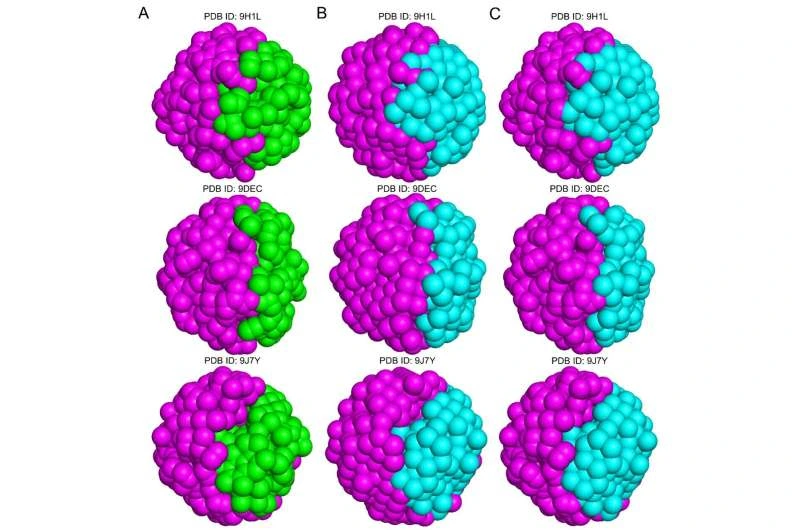
Traditional protein design models follow a top-down process that first generates complete protein structures before refining interactions. This often struggles with the complexity of atomic-level binding. Void-X overcomes this limitation by focusing directly on local atomic interactions. The model fills missing atomic regions using surrounding atoms as context, creating tightly packed and physically realistic protein interfaces. This bottom-up strategy produces more precise interaction predictions where molecular accuracy matters most.
The researchers trained Void-X using more than eight million atomic clusters from experimentally validated protein structures. The model achieved 78.3% prediction accuracy for intrachain interactions and 68.2% for interchain interactions. These capabilities could accelerate protein engineering for antibody therapies, enzyme design, synthetic biology, and other biomedical applications. By reducing trial-and-error experiments, GenAI can shorten research cycles while lowering development costs.
Why it matters
Protein engineering remains one of the most expensive and time-consuming stages of drug discovery.
• Atomic-level GenAI improves prediction accuracy before laboratory testing begins.
• Better protein interface design reduces costly experimental iterations.
• The workflow supports faster development of biologics, precision medicines, and synthetic biology applications.
• This represents a broader enterprise shift toward GenAI that solves highly specialized scientific design problems instead of routine automation.